
Defining the Solo Circumnavigation Record Category
The maritime community long required a definitive standard to separate regional passages from true global circumnavigations. To establish this baseline, the committee set the minimum distance requirement by calculating the circumference of the Earth at the equator and adjusting for the standard deviation of great circle routes required to avoid landmasses. The resulting mandate—a minimum distance of 21,600 nautical miles—requires vessels to complete a full global track.
A qualifying voyage must include crossing the equator at least once and passing through two antipodal points. The International Joshua Slocum Society maintains these thresholds to preserve the historical archive. Tracking data shows this strict criteria filters out coastal cruisers, ensuring only genuine global voyages enter the registry.
Vessel Heritage and Design Classifications
Vessel design directly impacts registry classification. The society honors historical lineage, particularly the Roberts Spray design, which is directly based on Captain Joshua Slocum's original vessel, Spray. Evaluating modern builds against this historical standard requires meticulous structural analysis.

Consider the case of solo circumnavigator Robert Graf and his vessel, DrifterWay. When classifying Frank Thiessen's build of DrifterWay, the registry evaluated the steel hull plating thickness against the original wooden scantlings of the Spray to ensure the displacement-to-length ratio matched. Intake records confirm the vessel features 1/4-inch to 5/16-inch steel hull plating and a 36-foot 9-inch overall length. This rigorous comparison guaranteed the modern steel construction accurately reflected the handling characteristics of Slocum's original wooden design.
Age Categories and Record Progression
Age-specific solo circumnavigation records present unique verification challenges. The registry initially debated calculating age records based on the sailor's age at the voyage's conclusion. However, after reviewing historical logs where sailors took unnecessary risks to finish before birthdays, the committee abandoned the conclusion-date metric to prioritize safety at sea.
The progression of the youth record highlights this shift in verification standards. Previous record holder Jessica Watson completed her voyage at 16 years old. The subsequent voyage of 14-year-old Dutch sailor Laura Dekker aboard her sailing vessel, Guppy, drew similar scrutiny. Her August 21, 2010 departure from Gibraltar coincided with severe weather, specifically Hurricane Danielle generating roughly 85 to 95 knot sustained winds in the Atlantic basin. By focusing on safe routing rather than an arbitrary birthday deadline, the registry allowed Dekker to navigate the hazard without risking her record eligibility.
Scope and Limitations: Navigating Maritime Hazards
Environmental limitations dictate mandatory routing challenges. Severe weather windows heavily impact official departure and arrival dates, forcing sailors to adapt their timelines to survive. Geographic hazards, such as the dangerous Agulhas current off South Africa, require careful navigation and often necessitate extended waiting periods.
During Robert Graf's voyage, the registry determined his extended stay in South Africa did not invalidate his continuous voyage status by verifying that the Agulhas current's seasonal intensification made safe passage impossible. Follow-up data confirmed Agulhas current velocities ranging from about 3.8 to 5.1 knots during the July 2, 2005 to October 4, 2006 timeline. Extended port layovers preserve continuous voyage status strictly when documented weather systems exceed Force 8 on the Beaufort scale; they do not cover routine provisioning.
Note: The acceptable duration for a weather-enforced port layover varies drastically depending on the vessel's hull design and the specific seasonal cyclone patterns of the region.
Documentation and Verification Standards
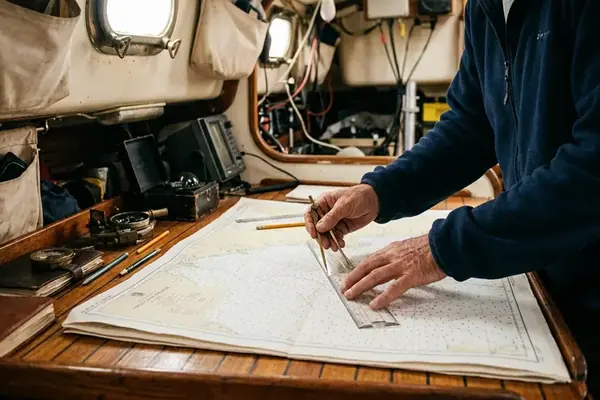
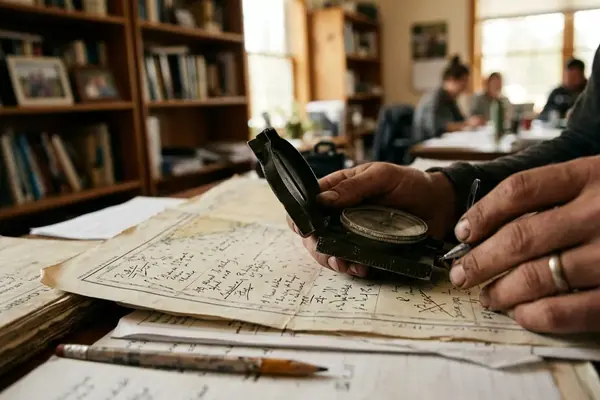
To eliminate discrepancies in historical archives, the society mandated a dual-verification system, requiring sailors to submit both electronic track points and physical logbook entries detailing barometric pressure and sea state. Relying solely on electronic waypoints without corresponding physical logbook entries detailing sea state and barometric pressure often leads to unverified voyage claims during satellite blackout periods.

Sailors must maintain strict documentation for circumnavigation attempts in progress. Log entries recorded every 4 to 6 hours form the backbone of this physical evidence. Barometric pressure readings logged to the nearest tenth of a millibar provide crucial meteorological context that corroborates the vessel's reported position against historical weather data. This rigorous process of logging coordinates, weather conditions, and port departures reflects the society's commitment to factual, verifiable maritime history.
The dual-verification system guarantees that all registry entries rest on a foundation of cross-referenced, physical, and electronic evidence.