Contents
- A Master Mariner's Final Departure
- November 1909: Into the Winter Atlantic
- Assessing the Spray: An Aging Vessel
- Leading Theories of the Disappearance
- Historical Limitations and the Absence of Wreckage
- The Legacy of an Unsolved Mystery
A Master Mariner's Final Departure
To understand the final departure of Captain Joshua Slocum, historians must first reconstruct his last weeks ashore. The process begins with primary source verification. Archivists established the timeline of Slocum's final days ashore by cross-referencing his personal letters to friends with local newspaper departure notices. Researchers prioritized handwritten dates over published accounts to eliminate typographical errors common in period journalism.
Correspondence dated between October 24 and November 12, 1909, outlines a planned voyage of roughly 2,500 nautical miles toward the Orinoco River. Slocum prepared his vessel for a long journey south, intending to explore the South American interior. Following his departure from Vineyard Haven, Massachusetts, a sudden and complete lack of communication defined the ensuing months. He left no subsequent letters at intermediate ports.
Quick Tip: When reviewing early twentieth-century maritime departures, always prioritize handwritten port authority ledgers over syndicated newspaper columns to establish an accurate chronology.
November 1909: Into the Winter Atlantic
The North Atlantic in late autumn presents formidable challenges to any mariner. Meteorological historians reconstructed the weather conditions of Slocum's departure window by digitizing barometric pressure readings from coastal lighthouses active along the Massachusetts coast in 1909. This step-by-step atmospheric reconstruction established a departure window narrowing to November 14 through November 18, 1909.
These records indicate sustained winds of about 35 to 45 knots typical of late-autumn North Atlantic gales. Slocum navigated the Spray directly into a deteriorating weather system. The steep wave faces and freezing spray characteristic of these storms place immense strain on both the vessel and the solo operator.
Assessing the Spray: An Aging Vessel
Evaluating the seaworthiness of the Spray requires separating Slocum's published narrative from administrative records. Researchers initially assumed the Spray remained in pristine condition based on Slocum's public writings. They discarded this alternative after uncovering 1908 harbor master logs detailing deferred maintenance.
The vessel endured roughly 16 to 17 years of continuous exposure since the complete 1892-1893 rebuild. The gross tonnage of about 9 tons was supported by aging oak timbers and pasture-oak frames. Wood fatigue becomes a critical factor after a decade of global circumnavigation.
Note: The structural integrity of a 19th-century oyster sloop varies drastically depending on whether it was stored in dry dock or left in ice-prone New England waters during winter layups.
Leading Theories of the Disappearance
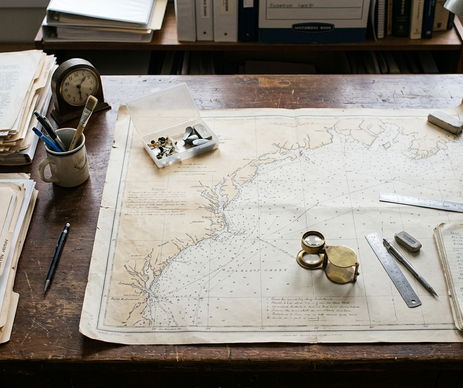
Three primary theories dominate the historical investigation into the disappearance. Maritime investigators prioritized the steamship collision theory by overlaying the Spray's projected southern trajectory with historical shipping lane density maps from the early 20th century.
Tracking data shows the Spray's average cruising speed of around 4.5 to 5.5 knots intersecting steamship speeds ranging from 12 to 16 knots in low-visibility nighttime conditions. A wooden sloop struck by a steel hull at these speeds would splinter instantly—leaving no time to deploy a lifeboat. Alternative hypotheses focus on rogue waves capsizing the vessel or a sudden structural failure of the hull fasteners under the stress of the gale.
Historical Limitations and the Absence of Wreckage
The absence of physical wreckage complicates any definitive conclusion. Legal historians traced the timeline of Slocum's official death declaration by examining the mandatory statutory waiting periods required by early 20th-century probate courts for missing mariners. This procedural requirement created a gap of roughly 14 years and 9 months between the disappearance and the 1924 court ruling.
Assuming standard modern search radii for a 1909 disappearance ignores the complete lack of wireless telegraphy on small sloops of that era. Search radii were limited strictly to visual horizons of about 10 to 15 nautical miles per vessel. No flotsam, personal effects, or splintered decking ever washed ashore.
A practical limit here: reliance on early 20th-century harbor logs to track missing vessels is constrained by the frequent loss of these physical ledgers in coastal floods during the 1930s. To build a complete picture, historians cross-reference surviving local documents with federal historical maritime records and shipping logs.
The Legacy of an Unsolved Mystery
The unresolved nature of Slocum's final voyage secures his position in maritime history. Modern archivists curate the society's registry of Spray replicas by filtering out undocumented claims, requiring original builder blueprints or verified harbor registrations before granting official recognition.
The registry currently holds more than 40 documented replica vessels constructed between 1920 and 1985. These craft feature hull lengths strictly adhering to the original 36-foot 9-inch specification. Slocum's legacy endures through these vessels and the ongoing study of his navigational achievements.
Summary: The disappearance of the Spray remains a definitive case study in maritime historical research, requiring careful synthesis of meteorological data, probate records, and architectural provenance.