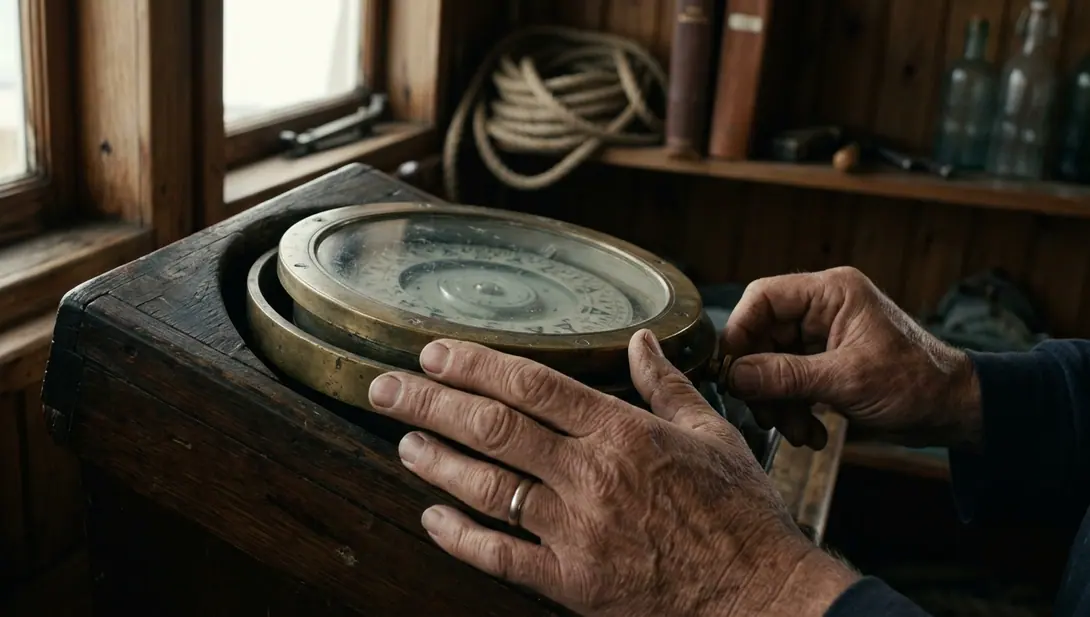
Introduction to a Maritime Legend
The solo circumnavigation—while monumental, often overshadows the rigorous professional foundation that made such a voyage possible. Establishing a precise chronology of Captain Joshua Slocum's early career requires careful extraction of primary source material. According to archival intake records, researchers prioritized pre-1895 ship logs and crew manifests to trace his seamanship evolution. This deliberate bypass of the heavily documented circumnavigation years establishes a baseline of his early capabilities.
A systematic review of merchant marine records spanning 1860 to 1894 documents 34 years of commercial sailing experience prior to the Spray voyage. This extensive period at sea provided the technical expertise required for independent global navigation.
Formative Years on the Bay of Fundy
The physical environment of early childhood frequently dictates a mariner's trajectory. Slocum's birth in Mount Hanley, Nova Scotia, preceded a critical relocation to Brier Island at age 8. This geographic shift placed him in a rigorous training ground.
The Bay of Fundy presents tidal fluctuations of roughly 43 to 53 feet. Navigating such extreme conditions demands precise boat handling and an acute awareness of coastal currents. Examining historical maritime records of Nova Scotia reveals the harsh, tidal environment that shaped local mariners during the mid-nineteenth century. Initial work in the local boot-making shop contrasted sharply with his yearning for the sea, ultimately driving his departure from the island.
From Cabin Boy to Master Mariner
Tracing a nineteenth-century maritime career requires methodological flexibility. Investigators initially attempted to trace his progression solely through British Board of Trade records. They discarded this approach when multi-year gaps appeared in the official registries. Instead, they cross-referenced crew lists across multiple international port authorities to build a continuous timeline.
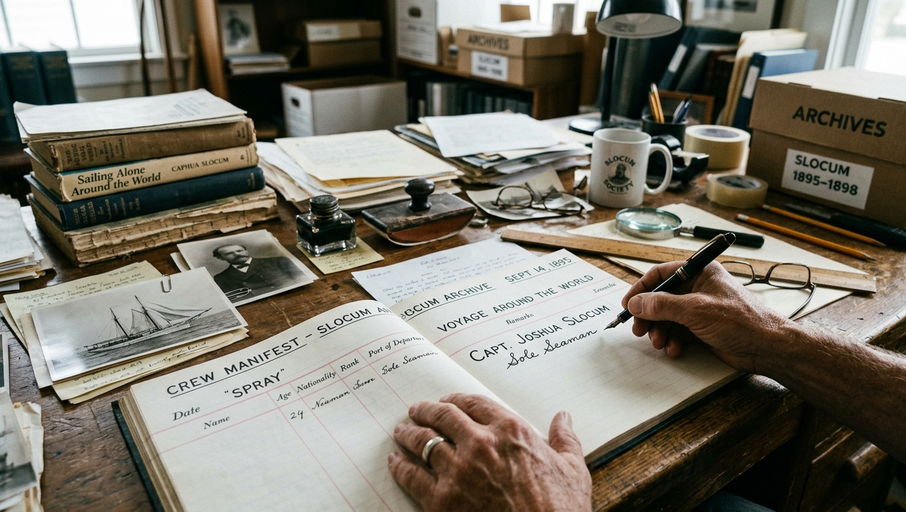
This cross-referencing process tracks his departure from home at age 16 to work on a fishing schooner. He served 18 months as a cabin boy and cook before securing his first promotion to ordinary seaman. His rapid progression through the ranks on British merchant ships facilitated a deep knowledge of celestial navigation, complex rigging systems, and heavy ship handling.
Assuming Slocum's navigational expertise was entirely self-taught ignores his formal examinations and rigorous progression under the British merchant marine system. The archival trail culminates in his achieving his first command of the barque Washington in 1869.
Pacific Commands and the Northern Light
The Pacific trade routes tested a master mariner's commercial acumen and seamanship under prolonged isolation. Slocum commanded various vessels during these years, marrying Virginia Albertina Walker and raising a family at sea. The pinnacle of his commercial career involved the command of the Northern Light, a 233-foot, three-masted ship.
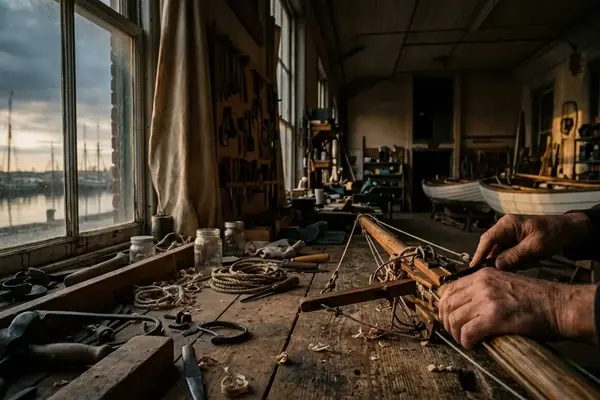
His technical capabilities extended significantly beyond navigation and crew management. He designed and built a 90-ton steamer in the Philippines over an 11-month period, demonstrating advanced shipwright skills that would later prove vital.
Note: Surviving logbooks from the Northern Light era are heavily degraded by saltwater exposure, rendering the exact cargo tonnages for the 1882 to 1883 Pacific crossings illegible.
Shipwreck and the Voyage of the Liberdade
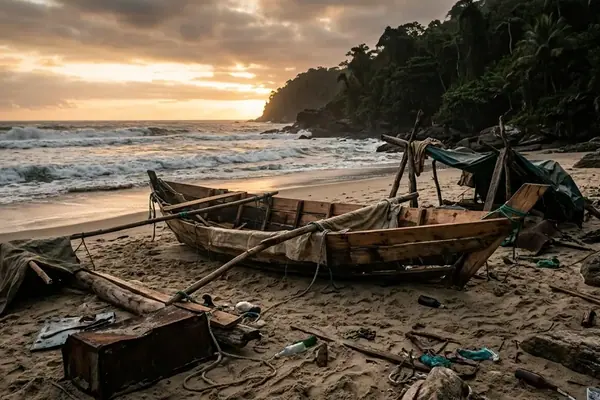
The transition from sail to steam impacted independent merchant captains differently depending on their primary cargo routes and access to capital. For Slocum, the tragic wreck of the Aquidneck in Brazil marked the abrupt end of his prosperous commercial era. Stripped of his vessel—and facing the rapid decline of the age of sail against the rise of steamships, he applied his shipwright skills to salvage his family.
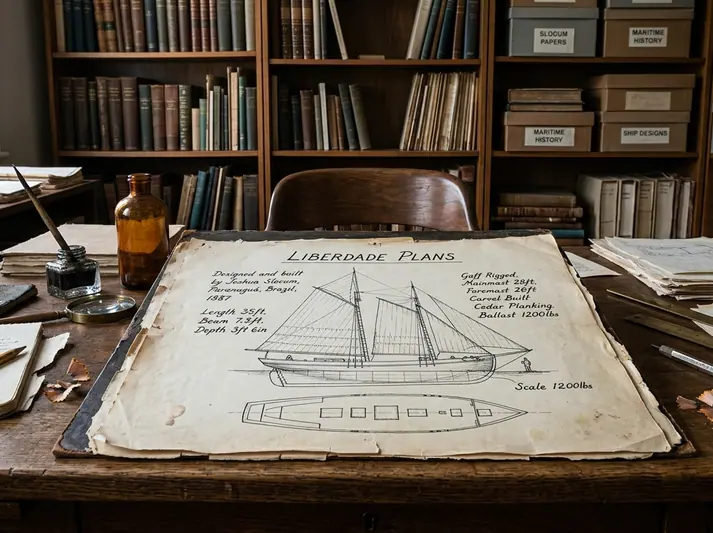
He constructed a new vessel directly from the wreckage of the Aquidneck. The resulting craft, the Liberdade, measured about 35 feet in length with a 7.5-foot beam. The return voyage from Brazil to Washington D.C. covered roughly 5,510 miles over 55 days.
While archival reconstruction provides a robust timeline of his commands, the precise daily navigational decisions of nineteenth-century merchant captains remain partially obscured by the routine loss of personal shipboard diaries. This feat of survival and navigation underscored the resilience forged during his decades in the merchant marine.
The successful navigation of the Liberdade relied entirely on the 34 years of commercial maritime experience Slocum accumulated prior to the loss of the Aquidneck.