The Vital Role of the Port Captain Network
Pull any Joshua Slocum Society newsletter from the early 2000s and you'll find a recurring name in the margins: a Port Captain. Not a title that carries rank in the legal sense, but one that mattered enormously to a sailor arriving alone in an unfamiliar harbor at dusk.
This directory covers a narrow window. Early 2001 through late 2010. That boundary isn't arbitrary — it reflects the operational lifespan of a specific roster of volunteers whose names appeared in society publications during the period now held under that copyright designation.
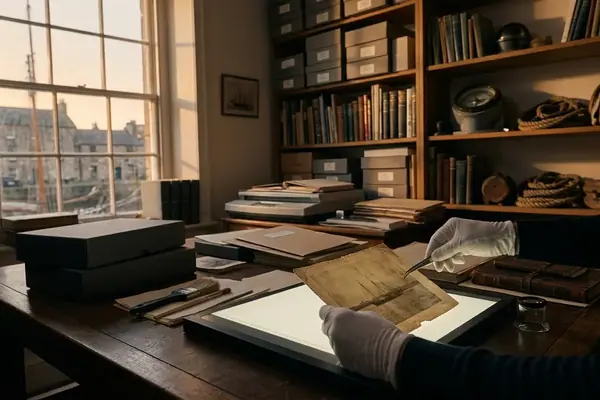
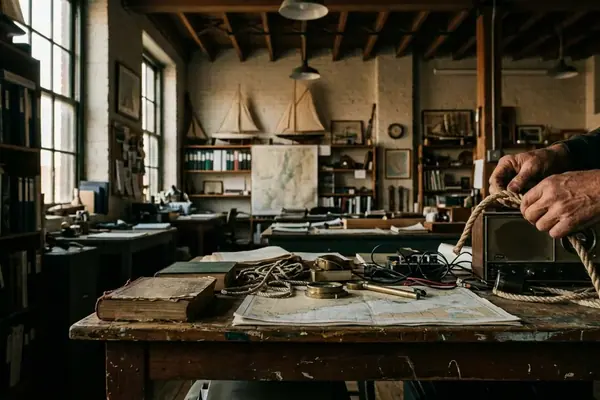
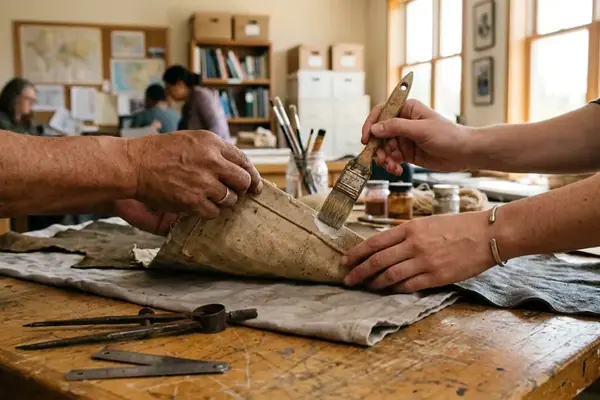
Reconstructing it took patience. Archivists cross-referenced the physical society newsletters against the early digital membership databases, line by line, to establish who was actually active and when. The digitization and verification of those physical logbooks ran to roughly a year and a half of continuous work. What emerged was not a marketing list but a verified timeline.
The purpose of the network was plain. A solo circumnavigator is, by definition, alone. The Port Captain put a familiar voice on the other end of a VHF channel and a local face on the dock.
Criteria for Selection and Duties
A Port Captain was a volunteer designated to assist traveling society members in a defined area. The job description sounds simple. The reality involved local knowledge that no chart could supply — which chandlery stayed open late, which official to call about a customs delay, where to find a welder on a Sunday.
Geography organized the role. A standard Port Captain typically managed a jurisdiction spanning roughly 50 to 100 coastal nautical miles. That range kept the responsibility human-scaled: close enough to know the waters, narrow enough to actually show up when a member needed help.
The 'Master' Designation
The senior tier worked differently. The society's board established the 'Master' designation by looking at traffic. Regions that received a heavy volume of incoming solo sailors — the transit corridors — warranted a more experienced hand, and the board elevated volunteers in those high-traffic zones to senior status.
Standards followed. Candidates for the Master Port Captain role were required to demonstrate about five to eight years of continuous local anchorage experience. The figure reflects what the work demanded: a Master coordinated other volunteers, not just visiting boats.
- Define and maintain a regional jurisdiction
- Provide local logistical and navigational assistance to members
- Coordinate seasonal availability around weather and access windows
- For Masters: oversee and support standard Port Captains within a broader region
Historical Roster of Master Port Captains
One early decision shaped how this directory reads. Archivists initially considered organizing entries strictly by longitudinal coordinates, to align with navigational charts. They discarded it. Sailors think in landmasses and ports, not bare meridians, so the roster follows regional jurisdiction instead.
Ted Jones – Master Port Captain
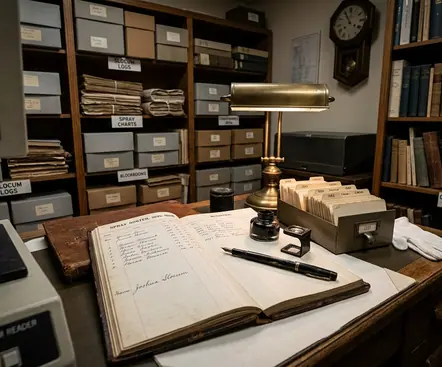
Ted Jones sat at the center of the network. His role was coordination rather than a single dock: he kept the international volunteer effort coherent across roughly half a dozen distinct maritime time zones. That spread is the hard part to appreciate now. Stitching together volunteers separated by half a day's clock, using the communication tools of the era, took a particular kind of stubborn diligence.
Yves Gelinas – Quebec Port Captain
Yves Gelinas held the Quebec jurisdiction, and his entry illustrates how geography dictated everything. He managed the region during the primary St. Lawrence navigation window, mid-May to late October. Outside that window, the river closes its door.
The availability of a Port Captain in a high-latitude jurisdiction like Quebec depended heavily on seasonal ice clearance and weather windows. A name on a roster meant little in February. Gelinas's value was tied to the calendar as much as to the chart.
The Regional Volunteer Network
Individually, these were dockside contacts. Together, they formed something larger: a global safety net for traveling society members through the 2001-2010 era. A solo sailor could leave one Port Captain's range and, with a name and a channel, find another waiting at the next landfall. That continuity was the whole point.
Scope and Limitations of the 2001-2010 Archive
This directory is a snapshot. It documents a specific decade and the people who staffed it, and it should be read as history, not as a current contact sheet.
Historians fixed the archive's operational limits by mapping the listed VHF radio relay channels against modern decommissioned frequencies. The result was clear-cut. The protocols here relied on line-of-sight VHF ranges of roughly 15 to 25 nautical miles, and the transition away from those physical contact methods happened fast, in the early 2010s.
Note: The contact protocols and personnel listed in this directory apply exclusively to historical research and must not be utilized for active voyage planning or emergency maritime routing.
Put plainly: relying on 2001-era VHF relay schedules or defunct email aliases for modern coastal navigation would be a serious mistake. The frequencies have moved on. So have the volunteers. What remains is a record, preserved for maritime researchers who want to understand how solo sailors actually got help before the era of always-on connectivity.
One honest caveat on the reconstruction itself: because the directory rests on cross-referenced newsletters and early databases, a handful of seasonal or short-tenure volunteers may sit outside the verified timeline. The named Masters are documented; the longer tail of regional helpers is, by nature, harder to confirm.
Legacy of the Society's Volunteers
The model outlasted the people who built it. To trace its reach, archivists reviewed post-2010 cruising logs and watched how the physical support structure seeded the digital communities that followed.
The foundational support structures these volunteers established remained the standard reference for solo circumnavigators for nearly a decade. Ted Jones's coordination, Yves Gelinas's seasonal stewardship of the St. Lawrence, the broader regional net — these set an expectation that an arriving sailor would find a hand on the dock. Modern cruising forums and apps are, in spirit, the same idea wearing newer clothes.
The records themselves are now secure. Archival preservation of these specific volunteer rosters was finalized in the years around 2018 to 2021.
The 2001-2010 Master Port Captains Directory preserves a volunteer-driven safety net built around regional jurisdictions, seasonal windows, and VHF range. It belongs to maritime history — consult it for research, never for routing.