The Commercial Engine Behind Nineteenth-Century Solo Seafaring
Captain Joshua Slocum achieved a navigational triumph by pioneering the modern self-funded expedition model long before corporate maritime patronage existed. When he departed Boston on 24 April 1895 and completed his circumnavigation at Newport, Rhode Island, on 27 June 1898, he proved that a master mariner could convert personal seamanship and storytelling directly into working capital. The voyage examined in the society archives stands as a dual achievement of single-handed navigation and financial independence.
Late nineteenth-century maritime economics drove this innovation. Steam power steadily displaced deep-water sailing vessels, stripping veteran shipmasters of traditional command revenues and stranding experienced captains ashore. Faced with declining opportunities in the merchant fleet, Slocum shifted his focus from managing large commercial crews to operating a compact, single-handed platform. Rebuilt to measure approximately 36 feet 9 inches overall and 14 feet 2 inches in beam, the Spray stayed small enough for one experienced sailor to handle, maintain, and provision without outside payroll.
Eliminating crew wages solved only half the operational problem. A vessel crossing multiple oceans still consumes canvas, cordage, paint, and victuals. Without an institutional syndicate underwriting the enterprise, the Spray functioned as a working commercial vessel whose ongoing upkeep had to be earned port by port through public engagement and careful resource management.
Outfitting the Spray on Scavenged Timber and Port-to-Port Credit
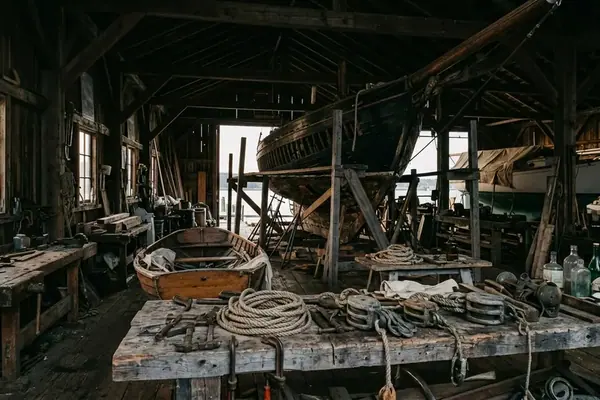
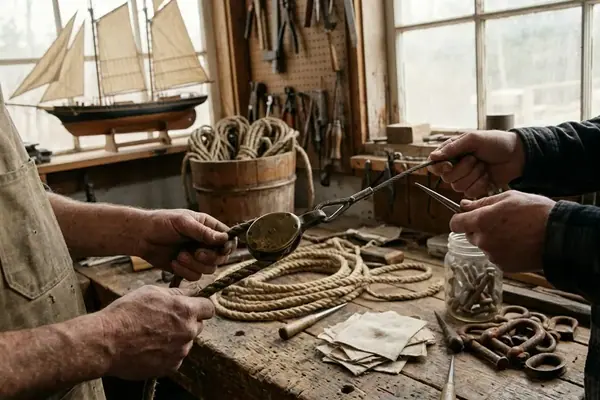
Before a solo mariner can generate income abroad, the vessel must leave the ways free of crushing shipyard debt. At Fairhaven, Massachusetts, Slocum took a derelict oyster sloop and reconstructed her himself over thirteen months. By substituting his own shipwright labor for hired yard hands, he concentrated his cash outlay strictly on timber, fastenings, and the specific tasks requiring outside assistance.
Slocum reported his rebuilding expenditure at $553.62. In maritime accounting, that figure represents initial capital formation prior to the April 1895 departure, distinct from the subsequent operating costs of the three-year circumnavigation. Entering the Atlantic with a debt-free hull changed the finances of the voyage.
The Spray Cash-Flow Split: Fairhaven rebuilding expenditure, foreign public appearances, and post-return publication belong to three distinct financial stages. Treating the $553.62 reconstruction outlay as the total cost of the circumnavigation obscures how the voyage actually sustained itself at sea.
Cash-flow constraints at departure meant provisioning relied on durable staples, modest local backing, and the generosity of maritime acquaintances. Because no corporate guarantor stood behind the vessel, every landfall carried commercial weight. A harbor entry offered more than rest; it provided an immediate venue to replenish ship's stores through local curiosity, hospitality, and paid public appearances.
Port-of-Call Magic-Lantern Lectures as Immediate Working Capital
While publication contracts required distant editors and long production schedules, a live lecture turned local curiosity into immediate working capital during a harbor stay. Slocum reached Australia in 1896 and remained in the region into 1897, using colonial port cities to convert his ocean crossings into ticketed public events.
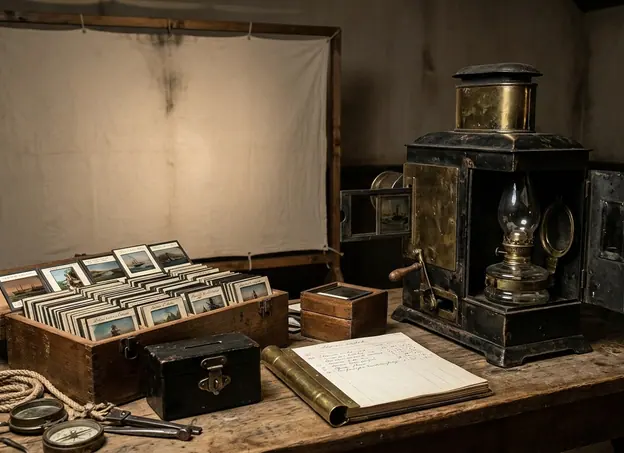
Executing a nineteenth-century magic-lantern performance required more than a speaker and a rented town hall. The presenter relied on an illuminated optical apparatus that projected images from glass slides onto a screen, demanding slide preparation, lamp fuel, and venue coordination before a single ticket sold. Alongside these formal hall appearances, port revenue took several distinct forms that historians evaluating the Solo Circumnavigators Registry keep strictly separate:
- Box-Office Admissions: Ticketed lectures in municipal halls or theatrical venues where port populations paid to hear accounts of exotic anchorages and heavy-weather seamanship.
- Vessel Inspection Fees: Paid public access to board or view the Spray at the dock, monetizing the physical novelty of a tiny sloop crossing open oceans.
- In-Kind Harbour Support: Donated slipway services, canvas repairs, and gifts of fresh provisions offered by local maritime communities and colonial officials.
This immediate liquidity kept the expedition moving. Box-office receipts and exhibition fees bypassed international banking delays, putting cash directly into the ship's purse to pay for cordage, paint, and sea stores before the next long ocean passage.
Serialized Newspaper Dispatches and Mail-Steamer Syndication
Writing inside the Spray's compact cabin and intersecting with mail steamers at foreign ports allowed Captain Joshua Slocum to communicate with the wider world while still under way. However, reconstructing how narrative writing financed the voyage requires separating field correspondence from post-voyage publishing royalties.
A rigorous audit of voyage financing follows a strict documentary sequence. When historians verify whether a specific newspaper dispatch generated working cash during the journey, they look for a dated manuscript posted from port, a matching periodical issue date, and a corresponding payment record—because the famous 1899–1900 magazine serialization cannot itself demonstrate dispatch income received while the Spray was still circumnavigating.
The June 1898 Publication Boundary
The chronological boundary of the voyage defines how its literary revenue functioned:
- Voyage Completion (June 1898): Slocum drops anchor at Newport, concluding the operational phase of the circumnavigation.
- Illustrated Magazine Serialization (1899–1900): The principal serialized narrative appears in print after the vessel is safely home, monetizing the completed achievement for armchair readers.
- Book Publication (1900): Sailing Alone Around the World is issued in book form, turning the logbook and magazine chapters into a permanent literary asset.
Understanding this sequence prevents a common analytical error. The celebrated serialization and the 1900 book belonged to the commercial exploitation of a finished voyage. While earlier letters and local press reports built Slocum's reputation en route, the major literary windfall arrived only after the anchor went down in Rhode Island.
Why Modern Solo Mariners Should Study Slocum's Media Autonomy
Contemporary single-handed sailors navigating under the standards of the Solo Circumnavigators Registry face the exact capital puzzles Slocum solved in the 1890s. Today's mariners often blend personal boatyard labor, live port engagements or digital patronage during the passage, and long-form publishing after landfall. Treating these three mechanisms as a single uninterrupted subscription stream invites budget failure at sea.
Comparing nineteenth-century self-reliance with modern offshore campaigns highlights three financial stages:
- Pre-Departure Sweat Equity: Substituting the sailor's own mechanical and shipwright skills for yard invoices before April 1895 kept the Spray unencumbered by liens.
- Port-Stay Liquidity: Generating direct audience revenue during the 1895–1898 voyage covered immediate consumables without surrendering routing decisions to a distant backer.
- Post-Voyage Intellectual Property: Retaining full ownership of the narrative allowed the 1899–1900 serialization and book publication to pay dividends long after the sails were furled.
Independent voyagers and maritime historians should prioritize direct audience ownership and self-syndicated storytelling over restrictive corporate title sponsorships. Commercial title sponsors routinely dictate departure windows, mandatory port calls, and hull modifications that compromise seaworthiness. By separating initial boatyard capital from en-route audience support and retaining complete editorial rights to the final log, modern solo mariners preserve the exact autonomy of routing and seamanship that brought the Spray safely around the globe.