From Ocean-Going Commands to the Spray
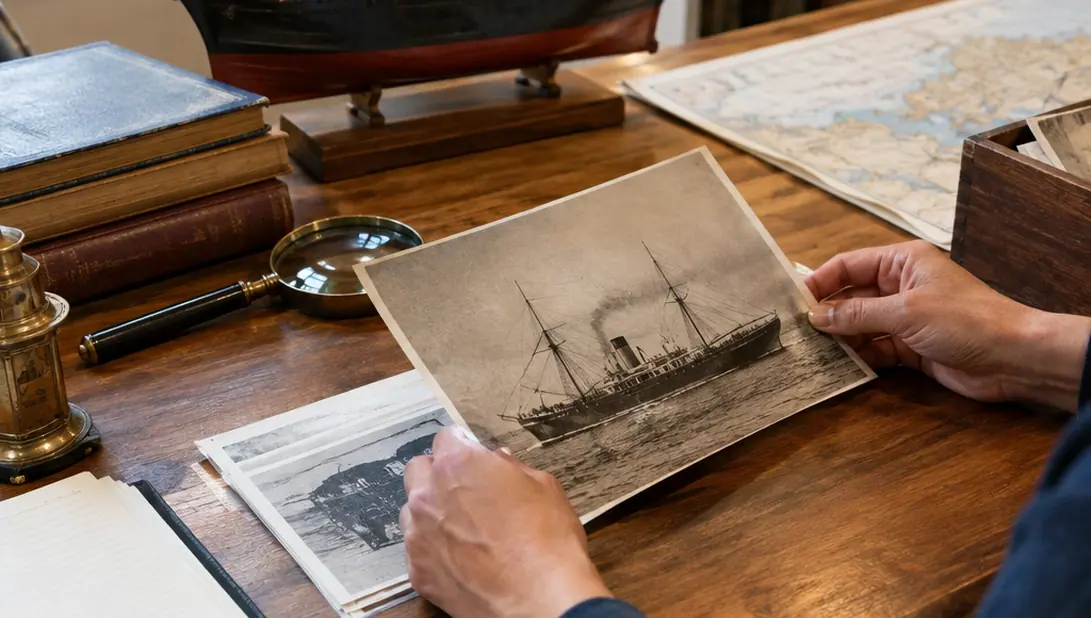
Before stepping aboard the 36-foot Spray, Captain Joshua Slocum had commanded the approximately 2,000-ton Northern Light, one of the prominent American sailing ships of its era. The contrast changes the starting point for his story. The sailor who would become known for sailing alone around the world had already spent decades directing commercial voyages across deep water.
His command history begins with the schooner Washington in 1869 and runs through the loss of the bark Aquidneck in 1887. Between those points came Pacific trading vessels and the much larger Northern Light. Each command placed a different set of demands on the master: keeping a vessel and its cargo moving, making passage and port decisions, and maintaining an effective crew.
The Spray later gave Slocum sole responsibility for a small vessel. Northern Light had required him to exercise responsibility through a crew aboard a large cargo carrier. Keeping those forms of seamanship distinct makes the later voyage easier to understand. Slocum approached the sloop with an established command history, even though its practical demands differed sharply from those of a merchant ship.
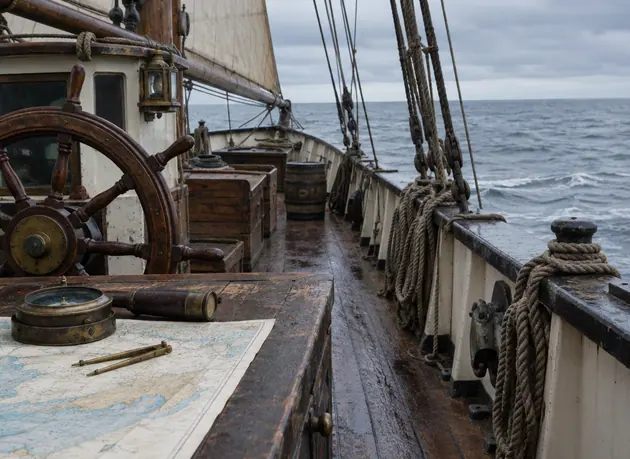
A useful chronology follows the vessels rather than treating the Spray as the beginning of his maritime life: Washington, Benjamin Aymar, Amethyst, Northern Light, and Aquidneck. The sequence shows how far his responsibilities extended before the commercial career ended.
Washington and the Pacific Command Sequence
Slocum took command of the schooner Washington in 1869, sailing between San Francisco and Australia. This is the point at which the record shifts from service aboard a vessel to responsibility for one. A master had to bring ship, cargo, and crew through the passage together; success depended on more than reaching a destination.
During the 1870s, his subsequent commands included the barkentine Benjamin Aymar and the ship Amethyst. Their place in the chronology matters. They show continuing employment in Pacific commerce before the conspicuous large-ship command that followed in 1881. The vessels also mark a career built through repeated responsibility rather than a sudden appointment to Northern Light.
What a Pacific Cargo Required
Coal, timber, and general merchandise were among the cargoes carried in Pacific trade during this period. Each made loading a consequential decision. Cargo had to fit the vessel and the intended passage; the master then faced weather, port conditions, and the conduct of the crew while carrying it. Those demands give substance to the word command. It describes a continuing obligation from loading through delivery, not merely authority at sea.
The Washington route offers a clear example. A passage between San Francisco and Australia required decisions at departure, through the ocean crossing, and on arrival. The available facts do not identify a particular cargo on a particular Washington voyage, so the general cargoes of Pacific trade should remain separate from claims about that schooner’s manifest. That distinction is small, but it prevents a plausible description of the trade from becoming an unsupported account of one passage.
Readers checking this sequence can use 19th-century merchant marine records as a research starting point. A sound vessel chronology proceeds in order: establish the name and type of ship, identify when Slocum held command, then check any account of a voyage against records for that vessel and period. A ship name alone does not establish who served as master on every passage.
Northern Light and the Burden of a Large Crew
Slocum’s 1881 command of Northern Light stands at the peak of his merchant career. At approximately 2,000 tons, the ship was far larger than the Spray. Size brought standing, but it also enlarged the master’s obligations. He had to direct a substantial crew while keeping a large sailing vessel and its cargo moving across an ocean route.
Large sailing ships still carried commercial cargo as steamships took a growing share of long-distance routes. Northern Light therefore belonged to a working trade under pressure, rather than to an already vanished age of sail. Her command shows the scale of responsibility that remained available to an accomplished sailing-ship master in 1881.
The Reported Uprising
The command included a reported attempt at mutiny. Slocum quelled the crew uprising, and the voyage continued. That event puts crew discipline into the account as a practical problem: an ocean passage depended on people who could carry out the ship’s work under the master’s direction.
The evidence needs careful handling. Slocum’s own telling of the confrontation should be distinguished from independently corroborated crew testimony. Without that distinction, an account can quietly turn one participant’s description into a complete record of what everyone aboard saw and did. The firm point here is the reported uprising and its resolution; the available facts do not supply a fuller reconstruction of the dispute.
Northern Light also gives a useful measure of Slocum’s later change in circumstances. A master entrusted with a ship of this scale held responsibility for far more than his own survival at sea. Within a few years, his next defining command would combine that professional responsibility with personal ownership of the vessel itself.
Aquidneck: A Master’s Capital on a Brazilian Sandbank
In the mid-1880s, Slocum bought and commanded the bark Aquidneck and sailed her with his family. Ownership changed the stakes of a casualty. Earlier commands had tested his ability to manage a vessel and its voyage; Aquidneck also carried his invested capital. The distinction became decisive when the bark was lost.
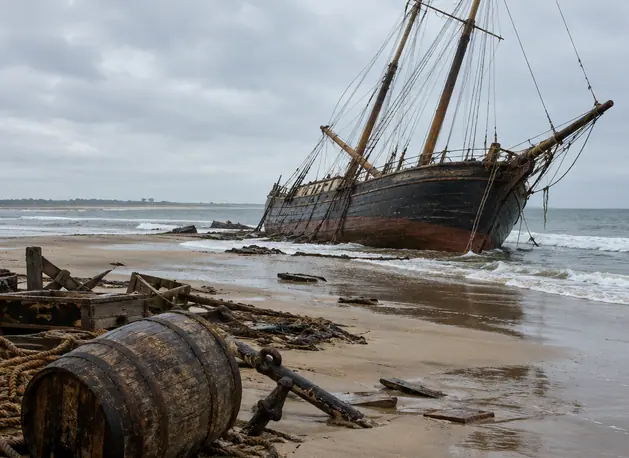
In 1887, Aquidneck wrecked on a sandbank in Brazil. She was uninsured. The loss therefore struck Slocum’s finances directly and severely, as well as ending this commercial command. The location and date belong together in the chronology: Brazil was where the vessel was lost, while 1887 marks the end of the command sequence that began with Washington.
Slocum’s response was practical. In Brazil, he built the 35-foot Liberdade, using materials salvaged from Aquidneck. The small craft belongs in the story because it shows what followed the wreck before the Spray entered his life. It was a vessel made in the aftermath of a specific commercial loss, using what could be recovered from the bark.
That sequence should remain in order. Aquidneck was wrecked in 1887; the offer of the Spray came in 1892. Compressing those events into a direct exchange of one boat for another erases just under five years and obscures the separate pressures Slocum faced. The wreck explains the immediate financial blow. The conditions of the wider maritime trade help explain why a return to the kind of command he had held aboard Northern Light became harder.
Steam, Lost Employment, and the Fairhaven Sloop
By the late 1880s and early 1890s, steamships were taking an increasing share of long-distance commercial work. Large sailing vessels continued to operate, but the change narrowed the prospects for masters whose careers had been built aboard square-riggers. Slocum faced that shift after losing an uninsured vessel he had owned. The two pressures worked together: his capital had suffered a severe loss, and the trade in which he had made his name was changing.
He was effectively beached in Boston. That description conveys the break from his earlier working life, yet it should not make the Spray voyage seem predetermined. The record gives distinct stages: the loss of Aquidneck in 1887, the later offer of a neglected sloop, the work of rebuilding her, and departure in 1895. Each stage required its own decision.
The vessel offered to him had been an oyster sloop. Its condition placed restoration between Slocum and any new passage under sail. Rebuilding the Spray drew on the resourcefulness visible after the Aquidneck wreck, when he had constructed Liberdade from salvaged materials. The circumstances differed, but both small boats followed a career shaped first by commercial vessels, cargo, and crew.
Reading backward from the famous solo voyage can flatten that career into a preface. Reading forward from Washington gives the Spray a more precise place: it came after Pacific commands, the approximately 2,000-ton Northern Light, and the uninsured loss of Aquidneck. In 1892, at 48, Slocum was offered the century-old oyster sloop Spray, then propped up in a field in Fairhaven in a rural setting.